What Stops A Cleanout In An Old Chicopee House
We connect you with independent Chicopee junk haulers. We are not a hauler.
Chicopee's housing went up around the mills, most of it between 1850 and 1940. That is a long time before anybody regulated what buildings were made of, and it means a cleanout here runs into things a newer house simply does not have.
None of this is a reason to leave a cellar full. It is a reason to say the age of the building on the first phone call, because four specific things change how the work gets planned, and all four are cheaper to handle before a crew is standing in the room.
One: asbestos, and where it hides
Anything built before 1978 may contain it. In this city the classic sighting is gray wrapped insulation on cellar pipes, often with a canvas outer layer. It also turns up in old boiler jackets, in nine inch floor tiles and the black mastic underneath them, in some roofing and siding products, and occasionally in old joint compound.
Left alone and undisturbed it sits there doing nothing. Broken, scraped or pulled at, it releases fibers, and that is the entire problem. Massachusetts requires licensed abatement contractors for removal. No hauler should touch it, and one who offers to is telling you something important about how they work.
What this means practically: a crew will work around it and clear everything else. That part of the job goes to somebody licensed and it does not stop the rest.
Two: vermiculite in the attic
Small gray brown pebbles, slightly shiny, poured loose between the joists rather than laid in batts. A large share of what was sold in this country before 1990 came from a mine at Libby, Montana that was contaminated with asbestos.
If your attic has it, the right move is to stop and have it tested rather than assume either way. Testing costs very little against the alternative. Attics in houses of this age have been insulated and reinsulated across a century, so what is up there is often not what the original builder put in.
Three: lead paint
Same age of housing, and Massachusetts takes it seriously. Lead paint was normal in homes here until it was banned for residential use, and this city's stock predates that comfortably.
For a cleanout it mostly matters when something gets broken, sanded or scraped, because that is when dust gets into the air and settles on everything. It changes the method rather than stopping the work. It matters far more on a demolition or renovation job than on carrying furniture out of a room.
Four: the fuel oil tank in the cellar
Very common in houses of this era, and usually decommissioned rather than removed when the heat got converted. A steel tank that held oil has residue in it and fumes with it, and it is a specialist removal rather than a hauling job.
Same story as asbestos: it does not cancel the clearance, it just belongs to a different contractor. Say it is down there when you book so the quote reflects what is actually being taken.
The two that are not hazards, just surprises
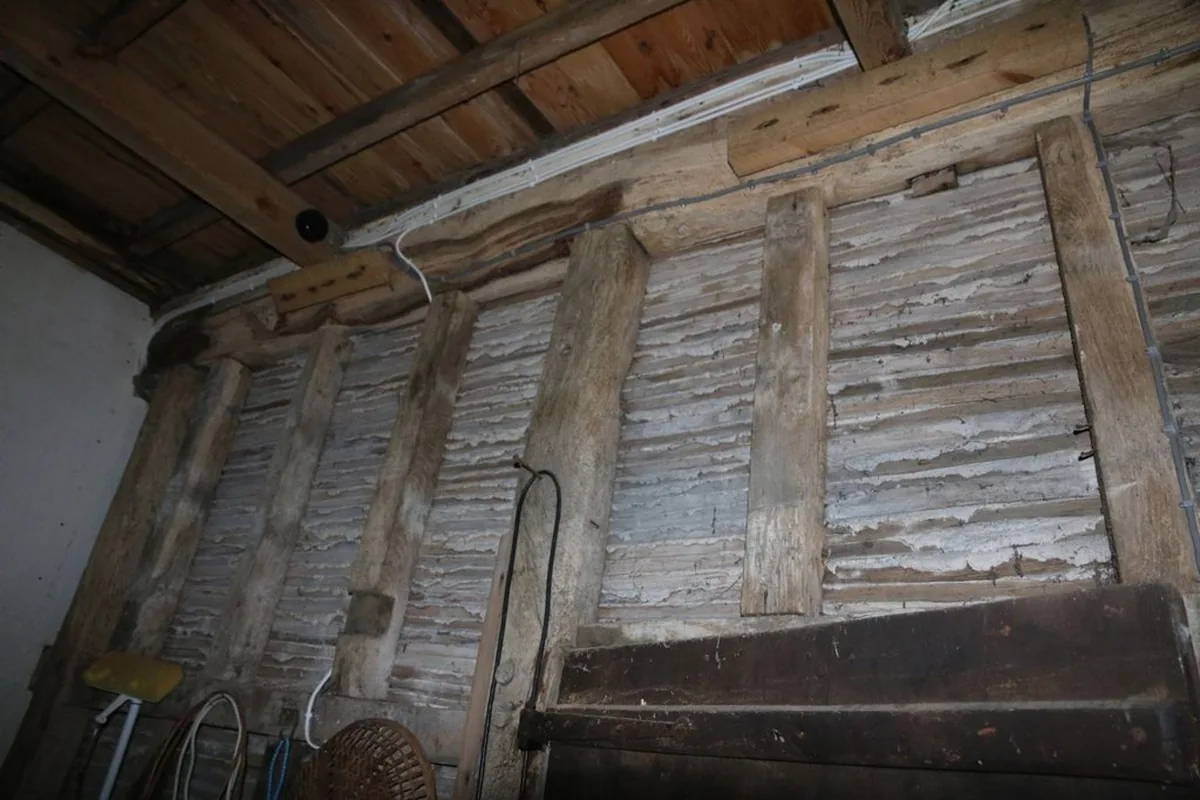
Plaster over wood lath instead of drywall, which is what is behind the walls in most pre 1940 buildings here. It weighs several times what gypsum board does and it produces enormous dust, so any demolition estimate built on drywall assumptions will be wrong.
And cast iron radiators, pulled out when steam heat was converted and left in the cellar ever since. They are excellent scrap and they run 300 to 600 pounds each, which makes every one a two person carry up a staircase. Count them and give the number when you call.
Damp, mold and the one rule that helps you
Cellars near the Chicopee and Connecticut rivers take water, and long term damp means mold. Light surface growth on stored boxes and furniture is ordinary and gets handled as part of the clearance. Anything spread across walls or framing is remediation work, which is a different trade.
Here is the part that works in your favor. Mattresses and textiles contaminated by mold fall outside the Massachusetts disposal ban under 310 CMR 19.006. So a ruined mattress out of a wet cellar can be disposed of normally rather than routed to a recycler, which occasionally makes that item cheaper rather than more expensive.
What to say on the first call
- The year the house was built, or your best guess.
- Whether there is wrapped pipe insulation or an old boiler in the cellar.
- Whether the attic insulation is loose pebbles or batts.
- Whether there is a fuel oil tank still down there.
- Whether the cellar has taken water, and roughly how badly.
Five sentences. They will not make the job more expensive, and they are the difference between a quote that holds and a crew that arrives, finds something they cannot legally touch, and has to stop.


Find out what your pile costs
Say what needs shifting and roughly where it sits. One hauler who works this city gets it, calls you back, and quotes it on sight. Nothing to sign and no fee for asking.
Call Now(413) 505-8565We connect you with independent Chicopee junk haulers. We are not a hauler.